Category Archives: Transformers

ElectricalEngineering123.com is the most comprehensive source for information regarding electrical transformers. For more details visit us today.

Spontaneous Magnetism / Magnetization
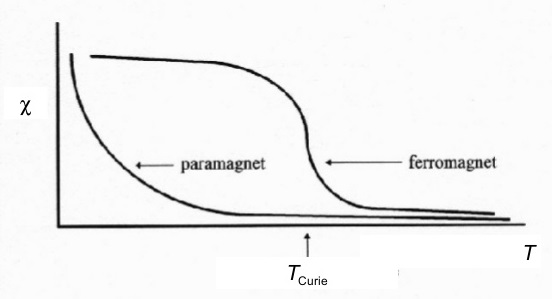
Spontaneous magnetization is the appearance of an ordered spin state (magnetization) at zero applied magnetic field in a ferromagnetic or ferrimagnetic material below acritical point called the Curie temperature or TC. Heated to temperatures above TC, ferromagnetic materials become paramagnetic and their magnetic behavior is dominated by spin waves or magnons, which are bosoncollective excitations… Read More: Spontaneous Magnetism / Magnetization »
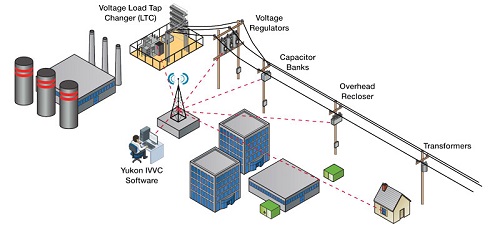
Power & Voltage Distribution Systems – Components Introduction

Distributions systems represent an important parts in the electrical grids and for this reasons the electrical generation & distribution companies delicate approximately 40% of the capital investment for distribution systems while the remaining is given to generation and transmission (40% generation & 20% transmission). The power distribution system is particularly important for an electrical utility… Read More: Power & Voltage Distribution Systems – Components Introduction »

Curie Weiss Law & Curie Constant

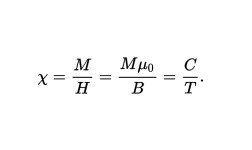
In a paramagnetic material the magnetization of the material is (approximately) directly proportional to an applied magnetic field. However, if the material is heated, this proportionality is reduced; for a fixed value of the field, the magnetization is (approximately) inversely proportional to temperature. This fact is encapsulated by Curie’s law: where is the resulting magnetisation… Read More: Curie Weiss Law & Curie Constant »

Ideal Transformer Equations

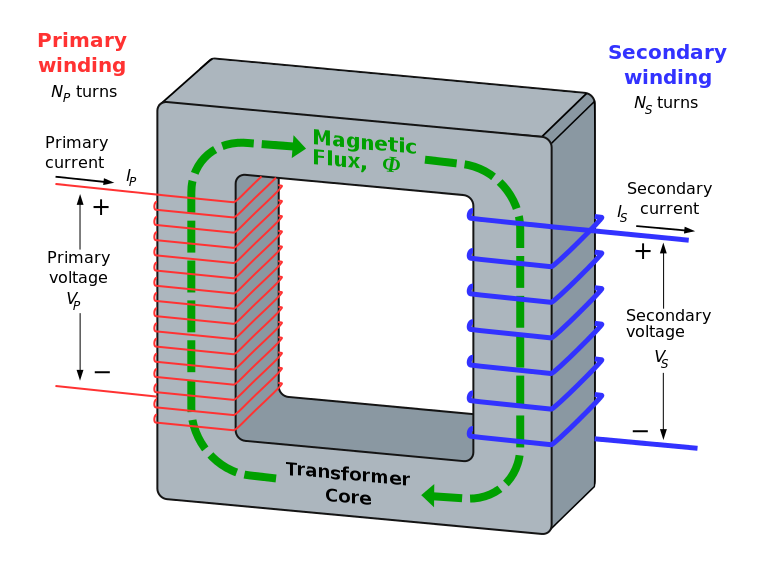
An ideal transformer is a theoretical, linear transformer that is lossless and perfectly coupled; that is, there are no energy losses and flux is completely confined within the magnetic core. Perfect coupling implies infinitely high core magnetic permeability and winding inductance and zero net magneto-motive force. Ideal transformer equations By Faraday’s law of induction:  (1) Where… Read More: Ideal Transformer Equations »

Introduction of Distribution Electrical Transformers – How Transformer Works?

In general understanding electrical distribution transformers are used to reduce primary system voltages (which is normally 2.4-34.5kV) to the level of utilization voltages i.e. 120- 600V. International electrotechnical commission standards do not distinguish between distribution electrical transformers and power transformer. They are all power electrical transformers in the sense that their purpose is to transmit… Read More: Introduction of Distribution Electrical Transformers – How Transformer Works? »

Transformers Maintenance & EMF Equation of a Transformer

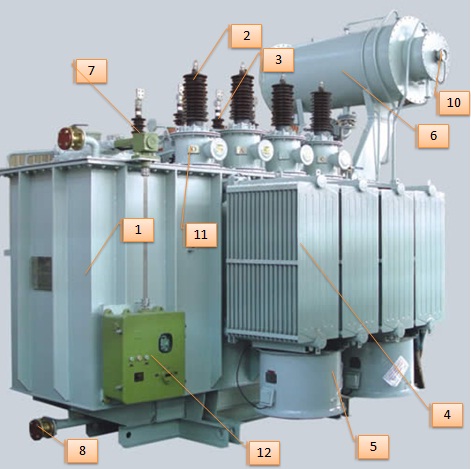
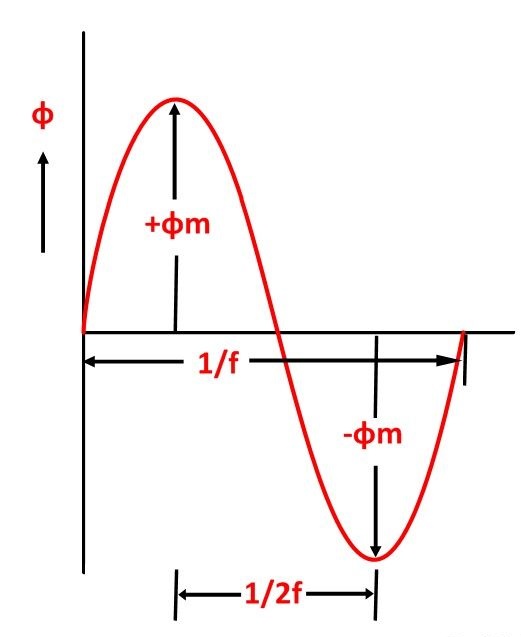
Power transformer is most costly and essential equipment of an electrical system. It is well known fact that power transformers are the heart of the power systems which enables to establish very large power systems networks. Failure of any transformer will create critical situation in power distribution network hence extra attention is required in commissioning,… Read More: Transformers Maintenance & EMF Equation of a Transformer »