Category Archives: Electric Current

If you are searching information regarding electric current then you have come to the right place. For more details visit us, we’re here to help you.

Single phase and 3 phase power comparison

As a new electrical student or a common man this questions comes in mind that why we prefer 3 phase power system. In recent years 3 phase electric wiring has become common and mostly used worldwide for power generation, power transmission, distribution and three phase engines or motors. A single-phase electric power supply is the… Read More: Single phase and 3 phase power comparison »
Voltage Regulator and Stabilizer – Simple Explanation

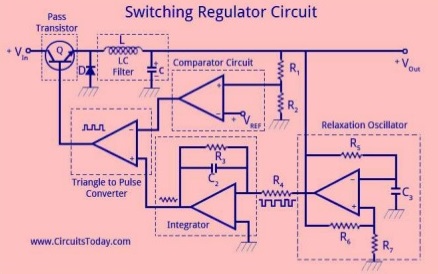
A voltage regulator is used to regulate or stabilize the voltage level for specific purpose. Voltage fluctuations are never acceptable for any appliance or equipment, because it may damage the electrical appliances etc. When a steady, reliable voltage is needed, then voltage regulator is the preferred device. Despite varying inputs or load conditions a stabilizer… Read More: Voltage Regulator and Stabilizer – Simple Explanation »

Overvoltage Protection Due to Lightning and Switching

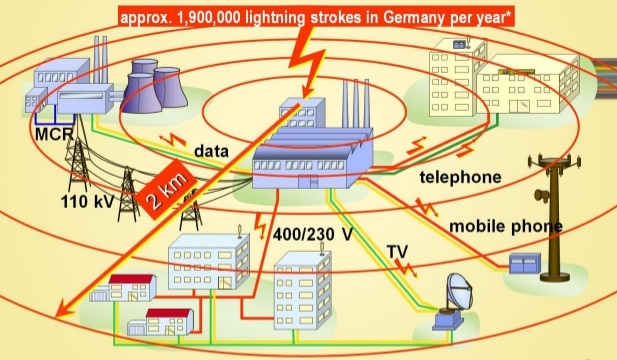
What is overvoltage: A sudden rise in voltage for a short duration on the power system is known as overvoltage or voltage surge. Overvoltage is always temporary that  exist for short period but that may cause damage to the power system due to surge in voltages. There are many causes for occurrence of overvoltage condition,… Read More: Overvoltage Protection Due to Lightning and Switching »

What is Levitation & Meissner Effect in Superconductivity

The phenomena of levitation of a magnet above a cooled superconductor is known as the Meissner Effect. If a superconductor is cooled below its critical temperature while in a magnetic field, the magnetic field surrounds but does not penetrate the superconductor. The magnet induces current in the superconductor which creates a counter-magnetic force that causes the… Read More: What is Levitation & Meissner Effect in Superconductivity »

Cable Sizing & Voltage Drop Calculations Formula

Cable sizing is done based on three parameters: Load current, Short circuit current carrying capacity, Voltage drop. Below are given simple steps for performing cable sizing calculations. Step 1 – Calculate Load Current: Calculate the load current from the load data available. Formula is: I=Load (in kW)/(sqrt(3)V(in kV)p.f) (A) The current obtained has to derated… Read More: Cable Sizing & Voltage Drop Calculations Formula »

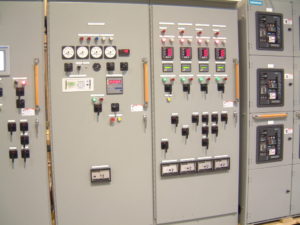
Standard Checks & Tests for MDB, SMDB, DB & Motor Control Center

As a standard practice installer or contractor shall arrange for the witnessing of the following tests on the fully equipped switchboards (main, submain distribution boards and Motor Control Centers MCC) including primary bus bars and connections at the factory, in accordance with IEC 439-1: High voltage power frequency tests on main and auxiliary circuits Dielectric/insulation… Read More: Standard Checks & Tests for MDB, SMDB, DB & Motor… »